Downloads

Winter 2025

This page brings together NHS campaign materials to support promotion of winter vaccinations. These vaccines include Flu, Covid-19 and RSV.

Stakeholders can access ready-to-use social media posts, translated materials, website and patient text, and artwork to help encourage uptake of flu, COVID-19 and RSV vaccines.

Key documents

Useful stakeholder materials below.

General winter vaccine text for websites

Winter vaccinations and protection

This winter, the NHS is offering vaccinations to help protect those most at risk from flu, COVID-19 and RSV. These viruses can cause serious illness and lead to hospitalisation, especially in older people, young children, pregnant women and those with long-term health conditions.

Winter vaccines 2025:

  • Flu vaccine: Free for children aged 2–16, adults aged 65+, pregnant women, people with certain health conditions, and others in eligible groups.
  • COVID-19 vaccine: Free for adults 75+, residents in care homes for older adults, people with health conditions that put them at higher risk, pregnant women, frontline health and social care staff, and carers/household contacts of immunosuppressed people.
  • RSV protection: New immunisation programmes are being rolled out for babies, toddlers, and older adults in certain groups to reduce serious illness from respiratory syncytial virus (RSV).

Don’t wait for an invitation—book as soon as you’re eligible.

How to get vaccinated

  • School age children: School vaccine sessions will run and or those that miss their vaccine for any reason, there will be catch up clinics or they can visit their GP.
  • Younger children: GP practices and community clinics are running for younger children or those who miss school sessions.
  • Pregnant women: Through maternity appointments, GP practices or pharmacies.
  • Adults: can book flu and COVID-19 vaccinations online, through the NHS App, or by calling 119. RSV will usually be administered by a GP.

Local services may also contact eligible people directly

More information:

Flu vaccine

Social media images and text

Click on the images to download

General materials

You can download and order children’s flu vaccine stickers, leaflets, posters and translated materials here:

Flu vaccination for children: leaflets and posters – GOV.UK

GPs text offering a flu vaccine to eligible patients: 

You are eligible for a free flu vaccine this winter. Please get in touch with us on: xxx to book your appointment or book online at: Vaccination and booking services – NHS 

Flu vaccine social text for all stakeholders:

  1. If you are eligible for a free flu vaccine, your GP surgery may be intouch. Please done delay – book your appointment as soon as you are invited. Getting your flu jab is the best way to protect yourself this winter. More info: Book, change or cancel a free NHS flu vaccination at a pharmacy – NHS 


  1. If you are 65+, pregnant, or have certain health conditions it’s time to protect yourself this winter with a flu vaccine. Your GP surgery may contact you directly or book online at: Book, change or cancel a free NHS flu vaccination at a pharmacy – NHS


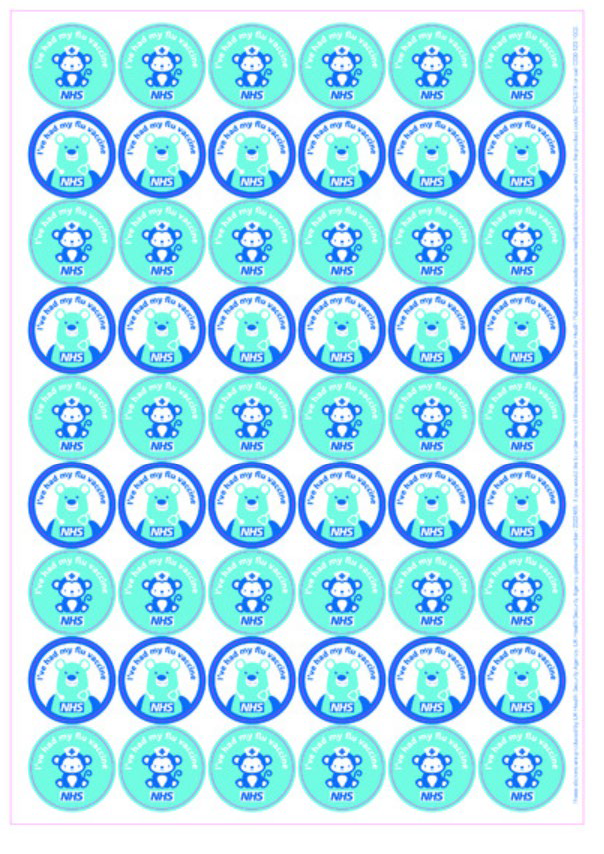
Sticker sheet

Click image to access website

Staff facing leaflet

Click image to access website 

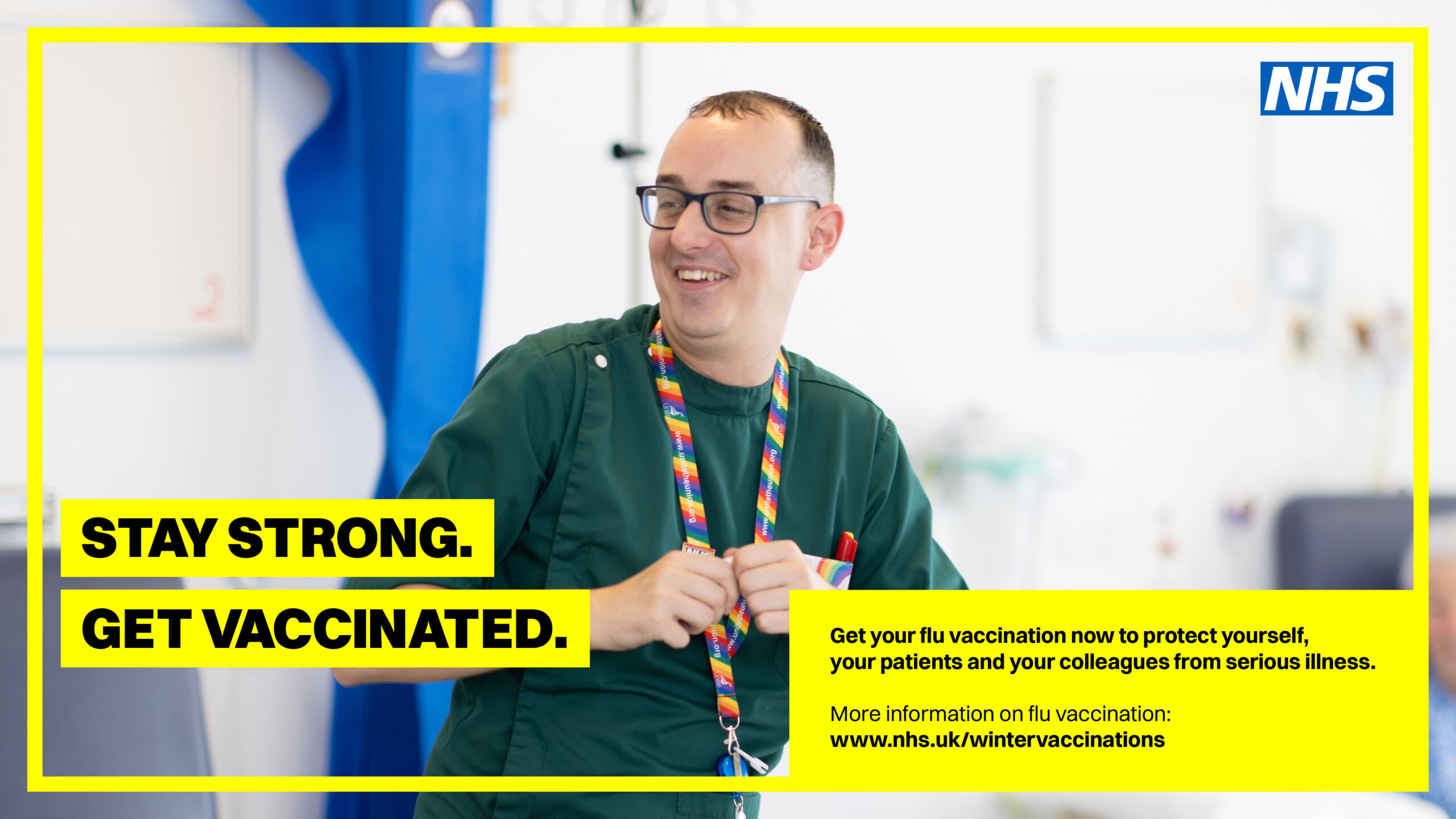
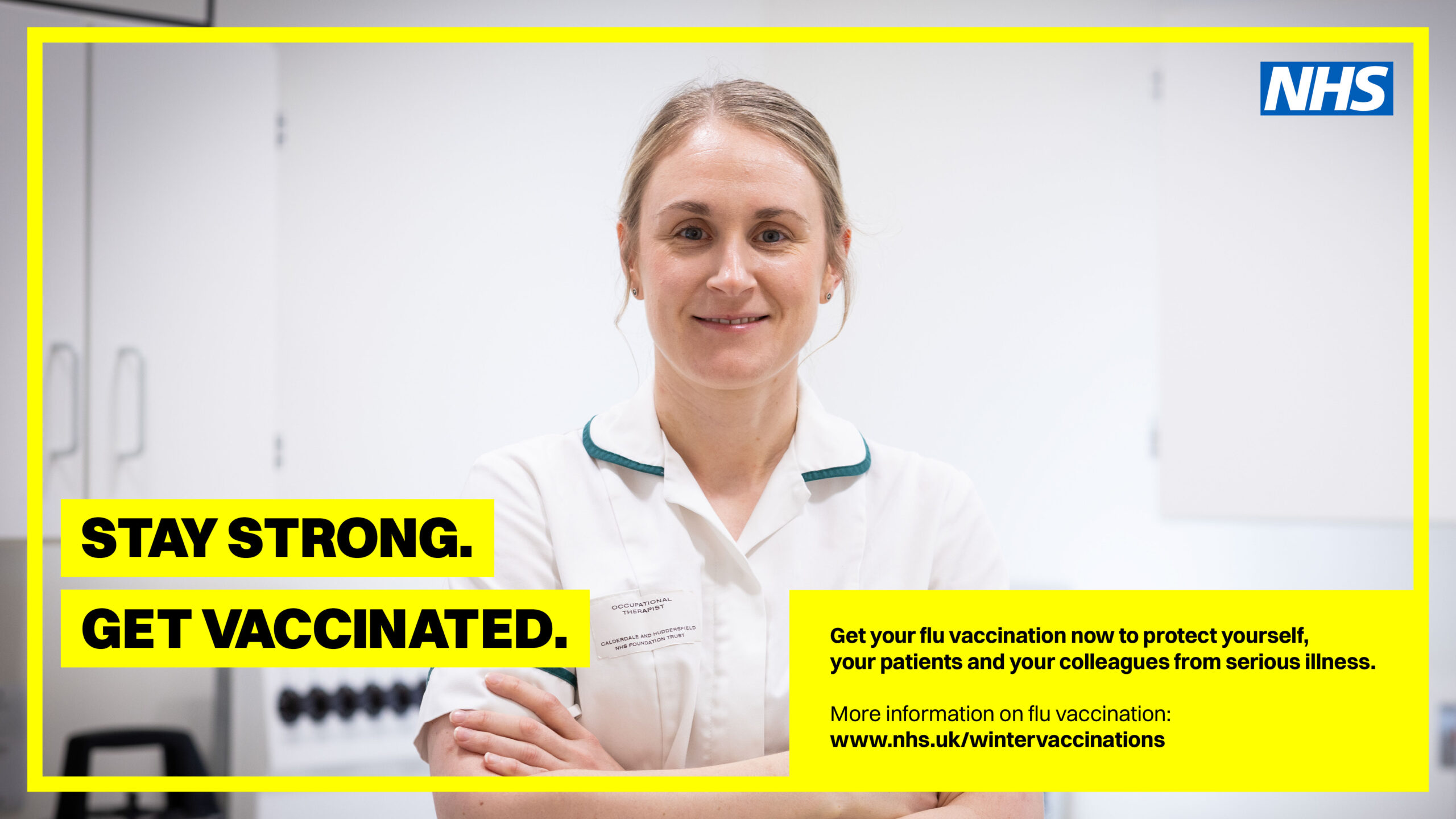
Healthcare assets

Click image to access website

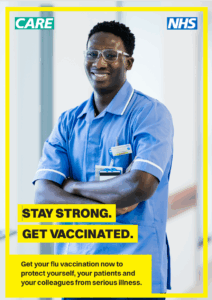
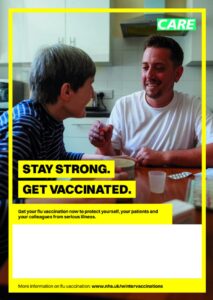
Care assets

Click image to access website

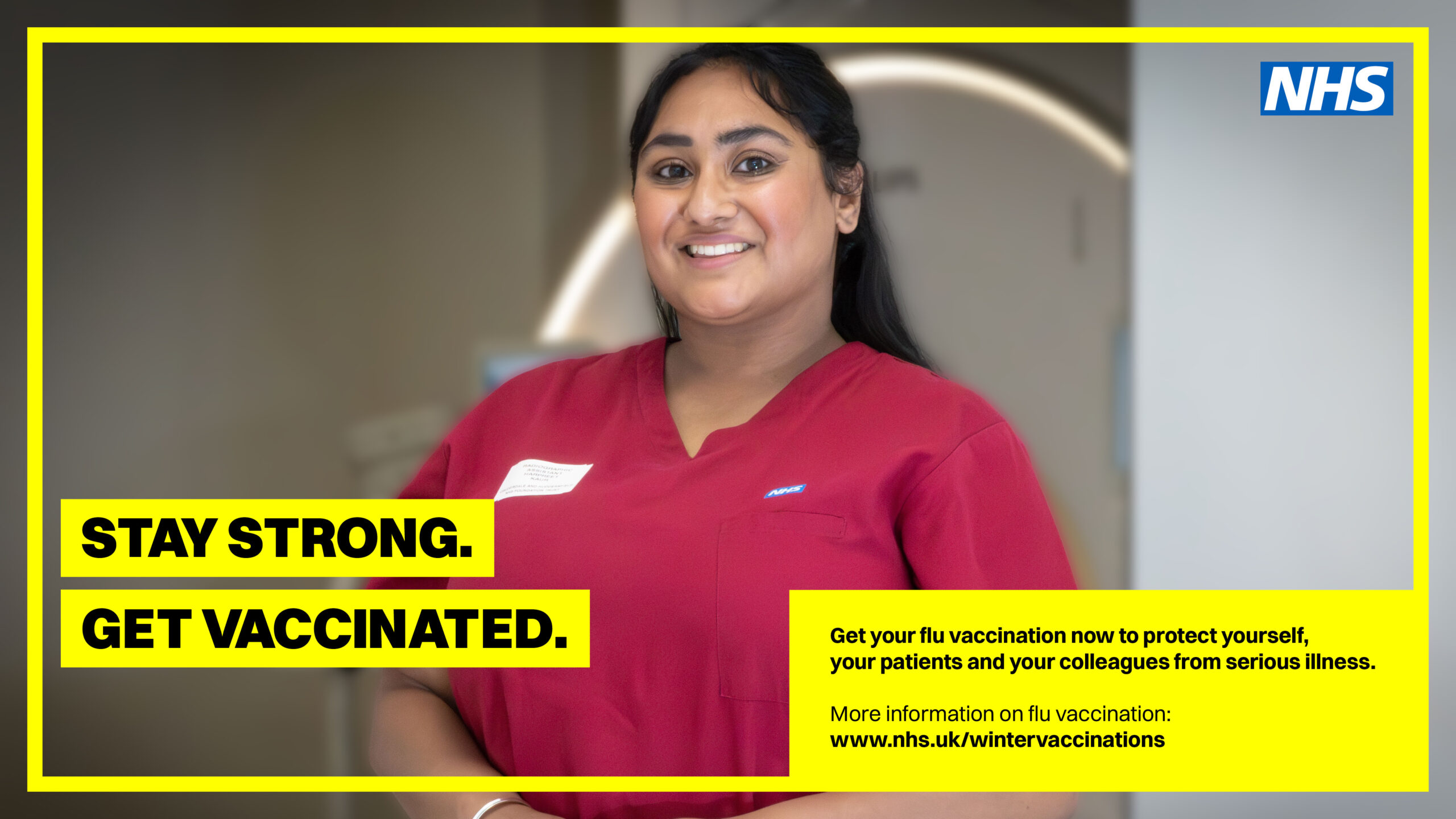
Staff facing flu vaccine posters

Download the leaflet below and other language versions here: Flu and vaccination simple text for adults

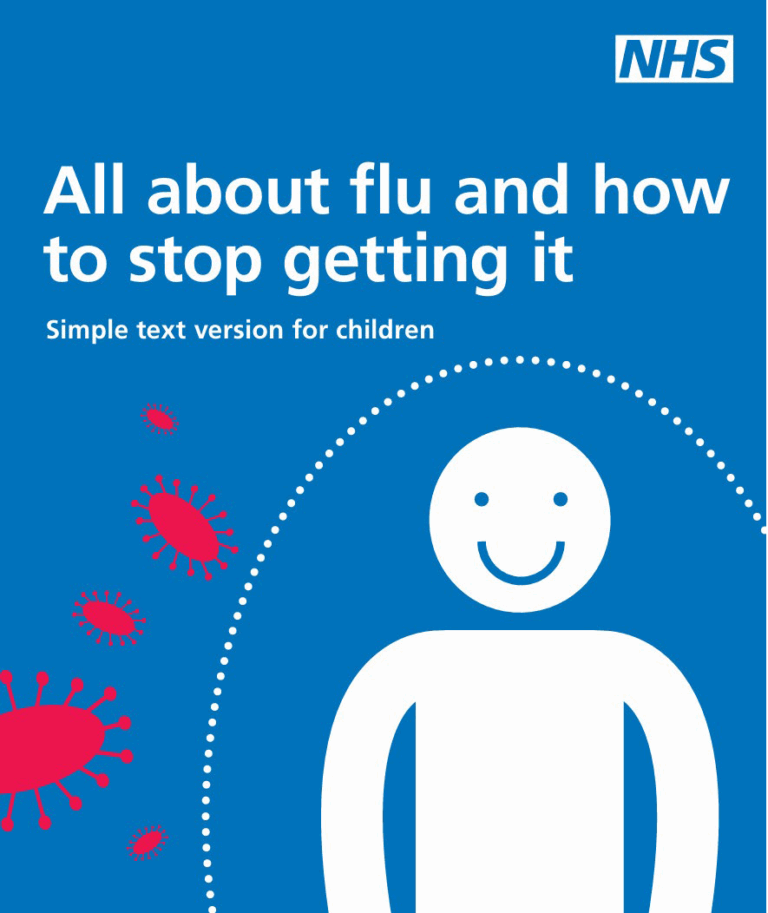
Download the leaflet below and other language versions here: Flu vaccination: simple text information for children 

Download the leaflet below and other language versions here: Protect yourself from flu: easy read

Flu stickers for children aged 2 to 11 years: Flu stickers for children aged 2 to 11 years

Flu vaccination guidance for Muslim families

The full guidance and advice can be found here: British Islamic Medical Association

In brief

  • Adults: the standard injectable flu vaccine does not contain porcine products
  • Children: the nasal spray (LAIV) contains porcine gelatine. Many parents choose the injectable alternative as it does does not contain gelatine . Your GP or school immunisation team can provide it.
  • Religious views: some Islamic scholars consider the nasal spray permissible due to medical need, while others prefer avoiding porcine ingredients when alternatives exist. 


Read the full guidance from the British Islamic Medical Association (BIMA): BIMA Flu Advice

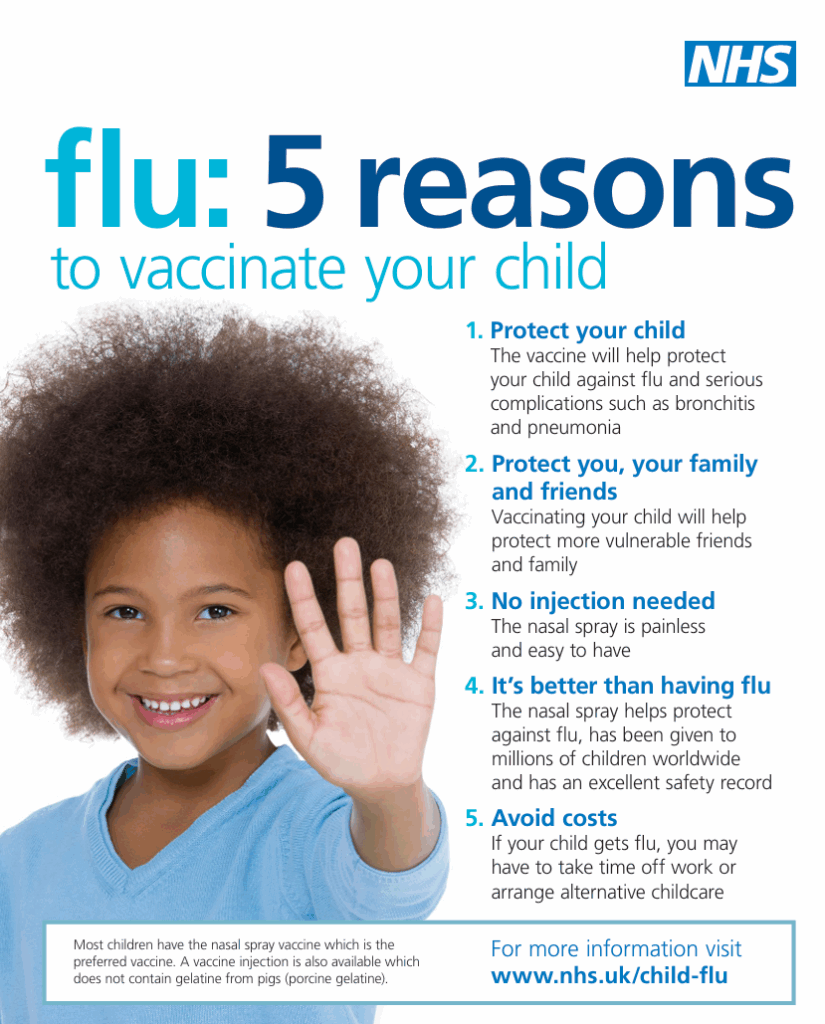
Children’s flu leaflets

Click images to download

Children’s posters

Click images to download

Making vaccination easier: NHS teams are expanding access through family drop-in clinics, community sites, and schools.

New for this year: Participating community pharmacies will offer the flu vaccine to 2-and-3-year-olds from 1 October. Find a pharmacy that offers free flu vaccination – NHS. Some school immunisation teams will also offer flu vaccines to 2-and-3-year-olds in nurseries.

  • Who’s eligible for the flu vaccine:
    • Anyone age 65+
    • All children aged 2–16 years
    • Children aged 6 months–18 years in clinical risk groups
    • Pregnant women
    • People who live with someone who has a severely weakened immune system.
    • Carers who receive Carer’s Allowance or are the main carer for an elderly or disabled person.
    • People in long-stay residential care homes.

How flu vaccines are delivered:

  • School sessions for most school-aged children
  • GP practices and community clinics for younger children, those who miss school sessions, and other eligible groups
  • Pregnant women via maternity appointments, GP practices, or pharmacies

Booking options

  • From 1 September pregnant women and children age 2 – 16 can book their flu vaccine.
  • Covid-19 vaccines and flu vaccines for all other eligible groups start 1 October.
  • The National Booking Service is open for flu and COVID-19 vaccinations for all groups to book from 1 October.
  • People can book online nhs.uk/wintervaccinations, through the NHS App, or by calling 119.

Adult flu vaccination programme dates

The NHS adult flu vaccination programme will begin in early October, with most vaccinations completed by the end of November. This timing aligns with the usual start of the flu season to ensure people are protected before the virus begins to circulate widely.

Why it matters

  • Last winter, flu vaccination prevented an estimated 100,000 hospitalisations in England.
  • Increasing uptake helps protect individuals at risk and reduces demand on health services during the busiest months.
  • Millions of invitations are being sent to eligible people, but they do not need to wait for an invite.
  • Stakeholders are encouraged to use the materials on this page to promote uptake and remind people they can book quickly and easily.

The Fluenz Tetra nasal spray is the vaccine currently used, it offers protection against four strains of the Influenza virus which are anticipated to be circulating in the UK this winter. These strains may be different from previous years. Therefore, the World Health Organisation recommends annual vaccination. 

The vaccine does contain a highly processed form of porcine gelatine, to keep it stable and effective. However, the World Health Organisation and Islamic Organisation for Medical Sciences, advised gelatine derived from impure animals has been sufficiently transformed to make it permissible, for use in medicines, including vaccinations.  For more information visit the gov.uk website

If you or your child find the porcine gelatine element of the vaccine unacceptable, your child may be able to receive an alternative vaccine via an injection. To opt for the gelatine-free inactive flu injection, select NO to the nasal flu immunisation on the consent website and you will be given the option to consent to the injectable vaccine instead.  You will receive an email close to the time of your school session with information on how to book a clinic appointment.

Children may develop a runny or blocked nose, headache, tiredness, and reduced appetite, lasting a few days. The vaccine is absorbed quickly so, even if your child sneezes immediately after having had it, there’s no need to worry that it hasn’t worked. Any other side effects are unusual. If you’re worried about any reaction, you can call the NHS 111 service. 

Your child should not have the nasal spray if they:

  • are currently wheezy or have been wheezy in the past three days (vaccination should be delayed until at least three days after the wheezing has stopped)
  • are severely asthmatic who have previously required intensive care or are currently (or within the last 14 days) being treated with oral steroids
  • have a condition that severely weakens their immune system, for example following a bone marrow transplant
  • have someone in their household severely immunocompromised who needs isolation
  • have had severe anaphylaxis to egg allergy requiring intensive care treatment
  • have had severe anaphylaxis to any other components of the vaccine
  • are receiving Salicylate therapies (other than topical treatment for localized conditions)

If any of the above applies to your child, please contact your local Immunisation Team to discuss vaccination alternatives. 

Children who have been vaccinated with the nasal spray should avoid household contact with people who have a severely weakened immune system, for 2 weeks following vaccination (e.g., those who are receiving chemotherapy). 

Covid-19 vaccine

Other NHS assets due early Oct

Key messages

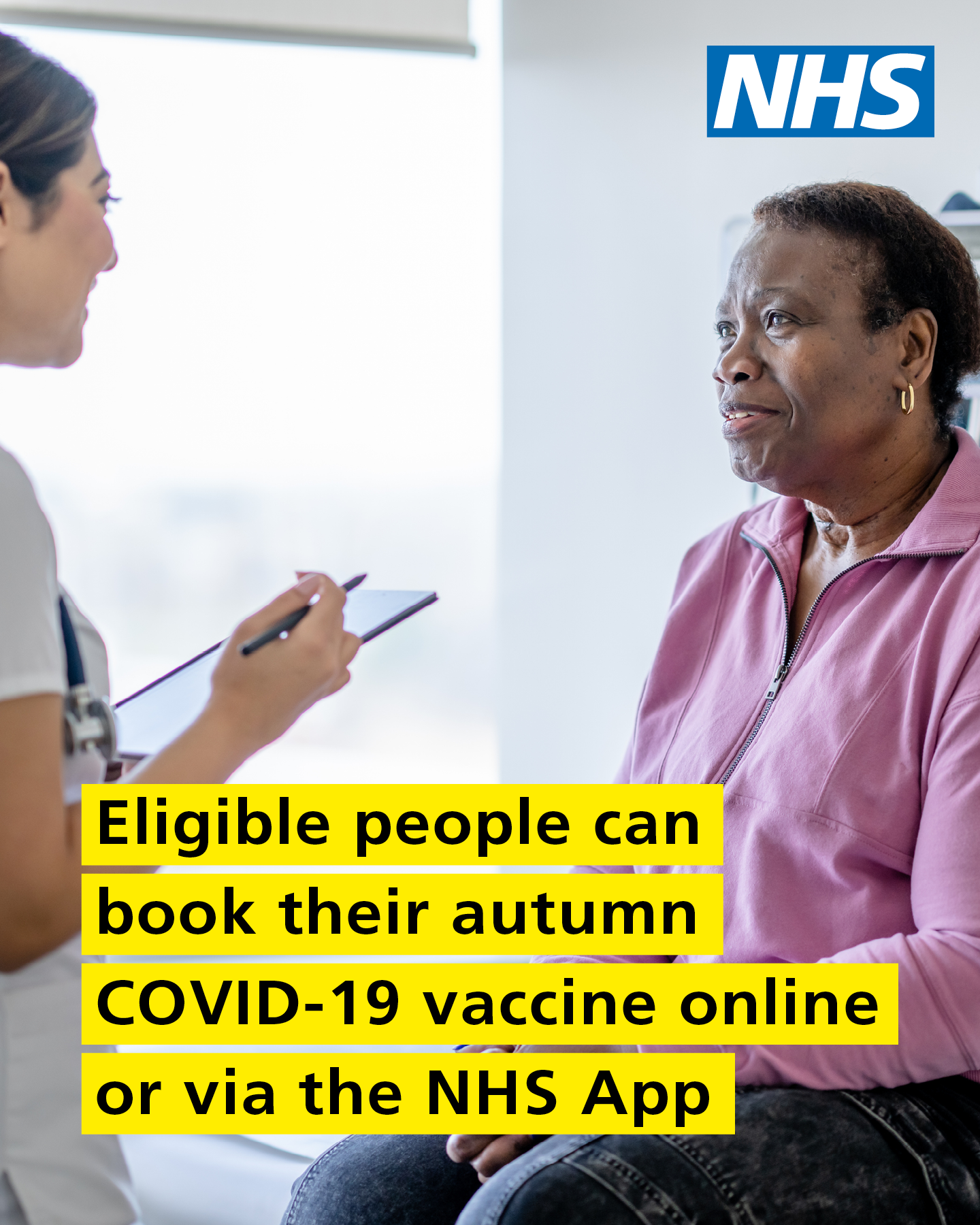
  • COVID-19 spreads more easily in winter because we spend more time indoors with others. The autumn 2025 COVID-19 vaccination programme is a targeted offer to those at highest risk of serious disease.
  • Topping up your COVID-19 vaccination will reduce serious symptoms and speed up your recovery if you do catch COVID-19. This protection will last through winter.
  • Having flu and COVID-19 at the same time can be very serious for people who are immunosuppressed.

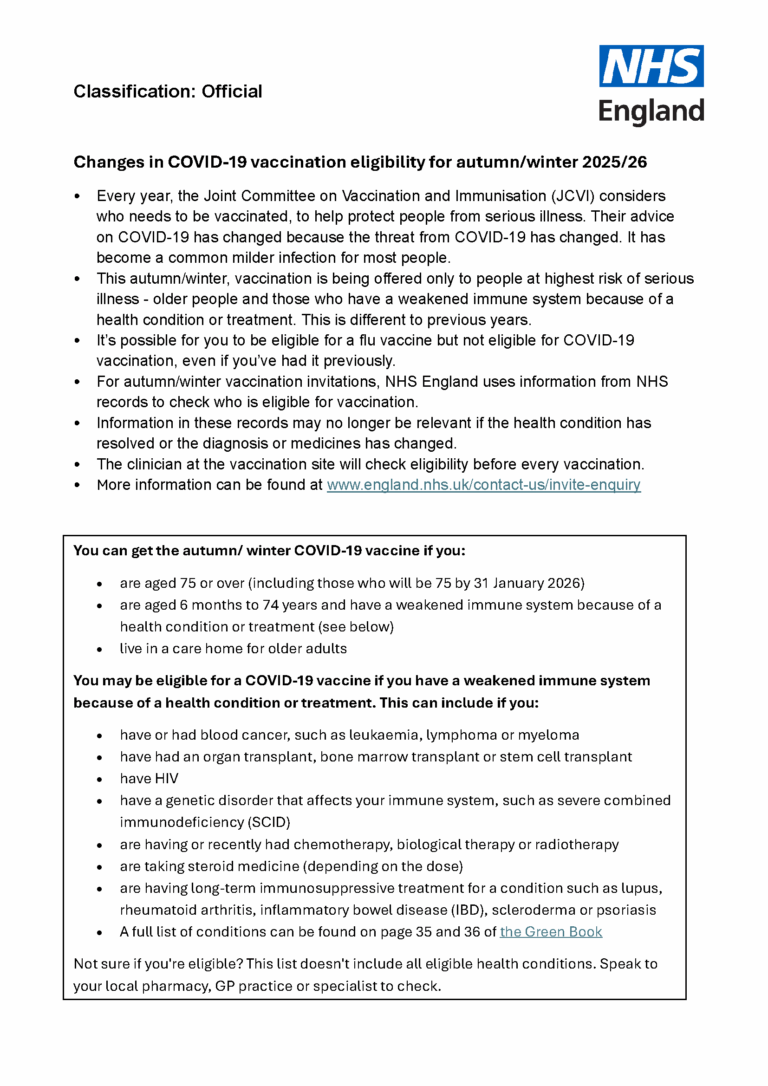
You can get the autumn/ winter COVID-19 vaccine if you:

  • are aged 75 or over (including those who will be 75 by 31 January 2026)
  • are aged 6 months to 74 years and have a weakened immune system because of a health condition or treatment (see below)
  • live in a care home for older adults

You may be eligible for a COVID-19 vaccine if you have a weakened immune system
because of a health condition or treatment. This can include if you:
  • have or had blood cancer, such as leukaemia, lymphoma or myeloma
  • have had an organ transplant, bone marrow transplant or stem cell transplant
    have HIV
  • have a genetic disorder that affects your immune system, such as severe combined immunodeficiency (SCID)
  • are having or recently had chemotherapy, biological therapy or radiotherapy
    are taking steroid medicine (depending on the dose)
  • are having long-term immunosuppressive treatment for a condition such as lupus, rheumatoid arthritis, inflammatory bowel disease (IBD), scleroderma or psoriasis

A full list of conditions can be found in Green-book-chapter-COVID-19_1_9_25

Vaccine efficacy

Having a COVID-19 vaccine is effective to reduce your chances of hospitalisation by
around 50%, compared to those who had their last dose at least 6 months ago and
who do not opt to receive a vaccine.

Vaccine safety

The COVID-19 vaccines have good safety records and are effective. It gives you the
best protection against COVID-19. 

Posters and info on eligibility

Click to download

Leaflets and materials

Click images to download 

Leaflet for parents of 6 month olds to 11 years at high risk: COVID-19 vaccination: at-risk children aged 6 months to 11 years – GOV.UK

Guide to Covid-19 vaccination this winter: COVID-19 vaccination: autumn programme resources – GOV.UK

Order ‘I’ve had my Covid-19 vaccine’ sticker sheets here: I have had my COVID-19 vaccination stickers

Digi screen slides

Click images to download 

Social media 

Click images to download 

 
We work with our health and care partners to plan services and improve population health and wellbeing.


Copyright © 2022. All rights reserved